EU-Based Cloudflare Alternatives: Reverse Proxy, SSL Termination, and No-Ingress Edge Security
Updated 2026-06-22
"Is there a Cloudflare alternative based in the EU?" shows up on r/devops more and more, and the framing is consistent: teams want edge security as a service — reverse proxy, SSL termination, and no ingress to the origin — but provided by a vendor whose data handling sits under EU jurisdiction. The driver is data residency and vendor location, not a feature checklist. Cloudflare's feature set is rarely the complaint; where the traffic is decrypted and who processes it is.
This is a comparison of the realistic options for EU-based or EU-constrained teams, grouped by how they actually work, plus how to choose between them.
What "edge security as a service" actually means
When people say "like Cloudflare," they usually want some subset of:
- Reverse proxy / TLS termination at the edge, so the origin isn't directly addressable.
- No ingress to the server — the origin makes outbound connections or sits behind the proxy; no public ports open on it.
- DDoS absorption and a WAF in front of the app.
- A clean domain with managed certificates.
The catch that matters for EU teams: TLS termination means the edge decrypts your traffic. So "EU alternative" really means "an edge operator I'm comfortable decrypting and processing my traffic under EU rules." Keep that lens on every option below.
Option A — EU edge/CDN vendors
There are European CDN and edge-security providers that offer reverse proxying, TLS termination, and DDoS/WAF features comparable in shape to Cloudflare's. Examples that come up include Gcore, Bunny.net, and other regional CDNs.
- Pros: Managed edge, DDoS scale you can't easily self-host, EU corporate domicile.
- Watch-outs: Corporate location is not the same as a data-residency guarantee. PoPs are global by design, and a "European company" may still process or cache traffic outside the EU. Before committing, read the current DPA, confirm which regions terminate TLS and cache content, and check sub-processor lists. These terms change — verify them yourself rather than trusting a blog (including this one).
Option B — Self-host the edge on an EU VPS (most control)
Rent a VPS in an EU region from a provider you trust (Hetzner, Scaleway, OVHcloud, and similar) and run your own edge: Caddy, Traefik, or nginx for reverse proxy and automatic TLS, plus a WAF layer such as ModSecurity/Coraza or a managed-rules add-on.
- Pros: You pick the exact country and provider; you control where TLS terminates and what's logged; no third party decrypts your traffic. Pairs naturally with the no-ingress pattern below.
- Watch-outs: You own patching, certificate renewal, and capacity. DDoS resilience is limited to what your VPS and provider can absorb — fine for most small-team traffic, not a substitute for a large scrubbing network under a volumetric attack.
This is usually the right default when data residency is the hard requirement and your DDoS exposure is modest.
Option C — No-ingress tunnel models
The "no ingress to the server" requirement can be satisfied directly with an outbound-tunnel architecture: the origin opens an outbound connection to an edge node, and nothing inbound is exposed.
- Self-hosted tunnels —
frp,rathole, or a WireGuard link to an EU VPS that runs the public-facing reverse proxy. Fully under your control and EU-located if the VPS is. - Tailscale Funnel / WireGuard relays — expose a specific service through a private overlay terminating on infrastructure you choose.
- Cloudflare Tunnel delivers the no-ingress shape too, but it's still Cloudflare at the edge — so it answers the "no open ports" goal, not the "EU vendor" goal.
No-ingress models are excellent for keeping origins dark, and when the edge node is your own EU VPS, you get residency control as a bonus.
Quick comparison
| Approach | Reverse proxy + TLS | No ingress to origin | DDoS scale | EU residency control | Ops effort |
|---|---|---|---|---|---|
| EU edge/CDN vendor (A) | Yes | Yes | High | Medium — verify DPA/PoPs | Low |
| Self-hosted edge on EU VPS (B) | Yes | With tunnel | Low–Medium | High | High |
| No-ingress tunnel to EU VPS (C) | Yes (on your VPS) | Yes | Low–Medium | High | Medium |
| Cloudflare Tunnel | Yes | Yes | High | Low (US vendor) | Low |
How to choose
- Residency is non-negotiable (GDPR-sensitive data, public-sector, contractual): Self-host the edge on an EU VPS (B), optionally fronted by a no-ingress tunnel (C). You control the jurisdiction end to end.
- You need real DDoS scale and can accept a vetted EU vendor: An EU edge/CDN (A) — but get the data-processing terms in writing and confirm where TLS terminates.
- The priority is "no open ports," not vendor location: Any no-ingress model (C), including Cloudflare Tunnel if EU domicile isn't a hard requirement.
- Small team, modest traffic, wants control: B is the most honest fit and the cheapest to reason about.
Caveats worth repeating
- Vendor location ≠ data residency. An EU-headquartered provider can still process traffic globally. The DPA and region settings are what matter, not the address on the website.
- TLS termination is a trust decision. Whoever terminates your TLS sees your plaintext. If that must be inside the EU and under your control, you're pushed toward self-hosting the edge.
- Terms drift. Pricing, regions, and sub-processors change. Treat any specific vendor claim — here or anywhere — as a starting point to verify against current documentation.
The takeaway
For EU teams, the "Cloudflare alternative" question is really a residency-and-trust question wearing a feature costume. If you need guaranteed EU handling, self-hosting the edge on an EU VPS — optionally behind a no-ingress tunnel — gives you the reverse proxy, SSL termination, and dark-origin properties you wanted, in a jurisdiction you choose. If you need large-scale DDoS protection and can vet a vendor's data-processing terms, a European edge/CDN fills that gap. Either way, decide based on where your traffic is decrypted and who processes it — that's the part the original question is really about.
From across the StoicSoft network
Hand-curated reads on the same topic from sister sites in the StoicSoft family.
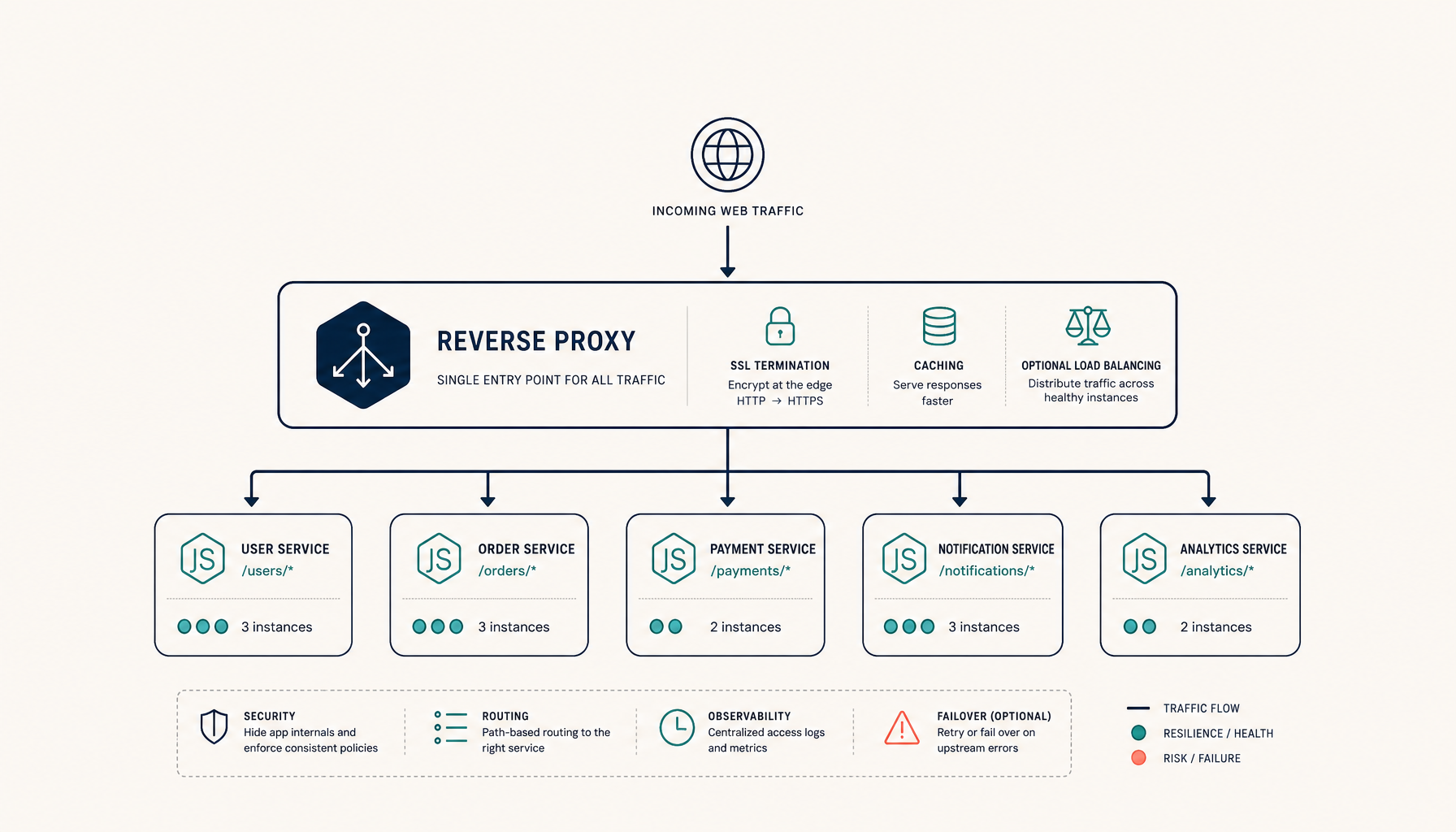 Deploy to VPS25 min read
Nginx Reverse Proxy for Node.js: Complete VPS Guide
Set up Nginx as a reverse proxy for Node.js applications with SSL, load balancing, and production-ready configuration.
Read on deploytovps.com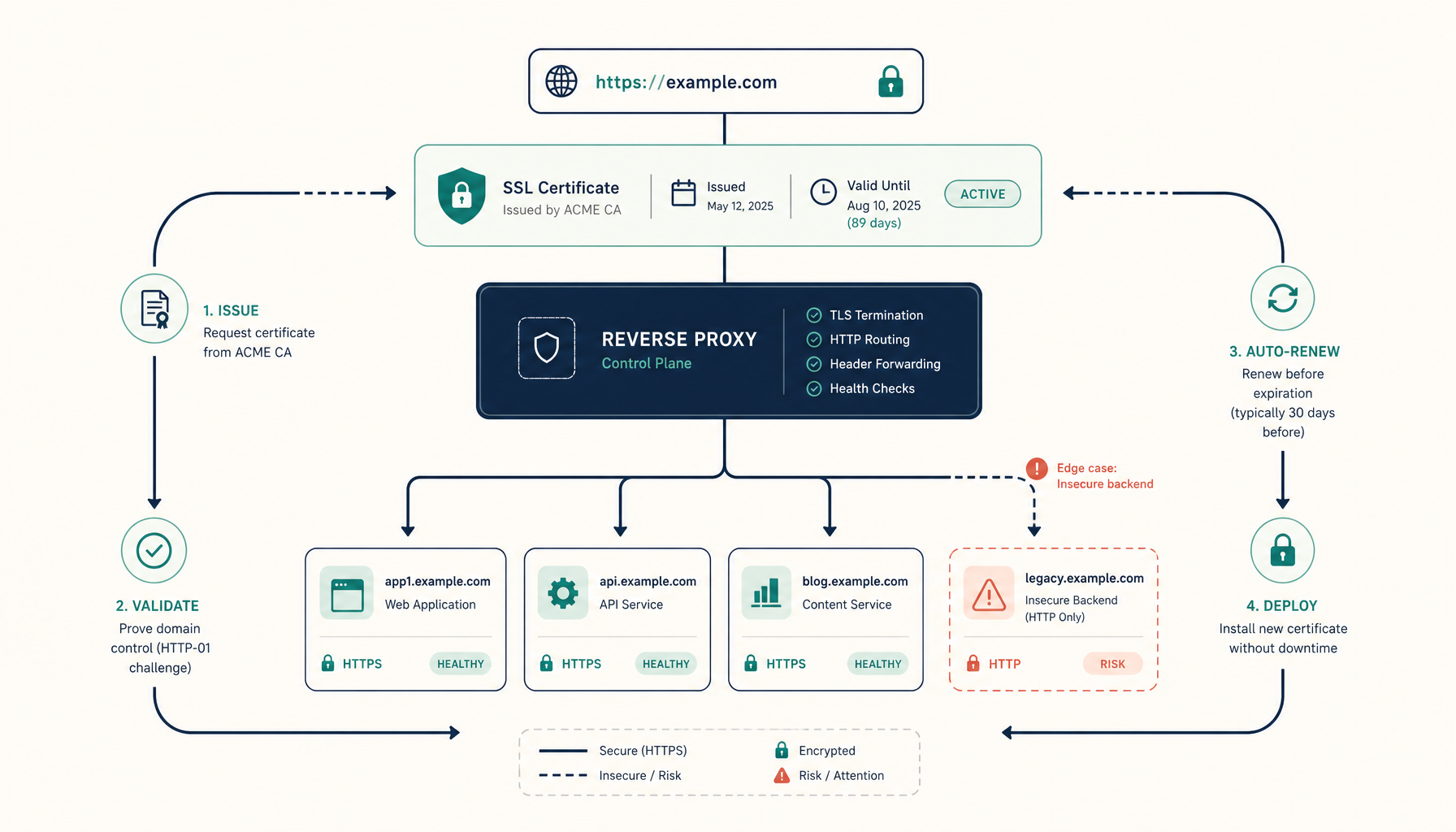 Deploy to VPS25 min read
Traefik SSL on VPS: Complete Setup Guide
Set up Traefik as a reverse proxy with automatic Let's Encrypt SSL certificates. The foundation for hosting multiple apps on one VPS.
Read on deploytovps.com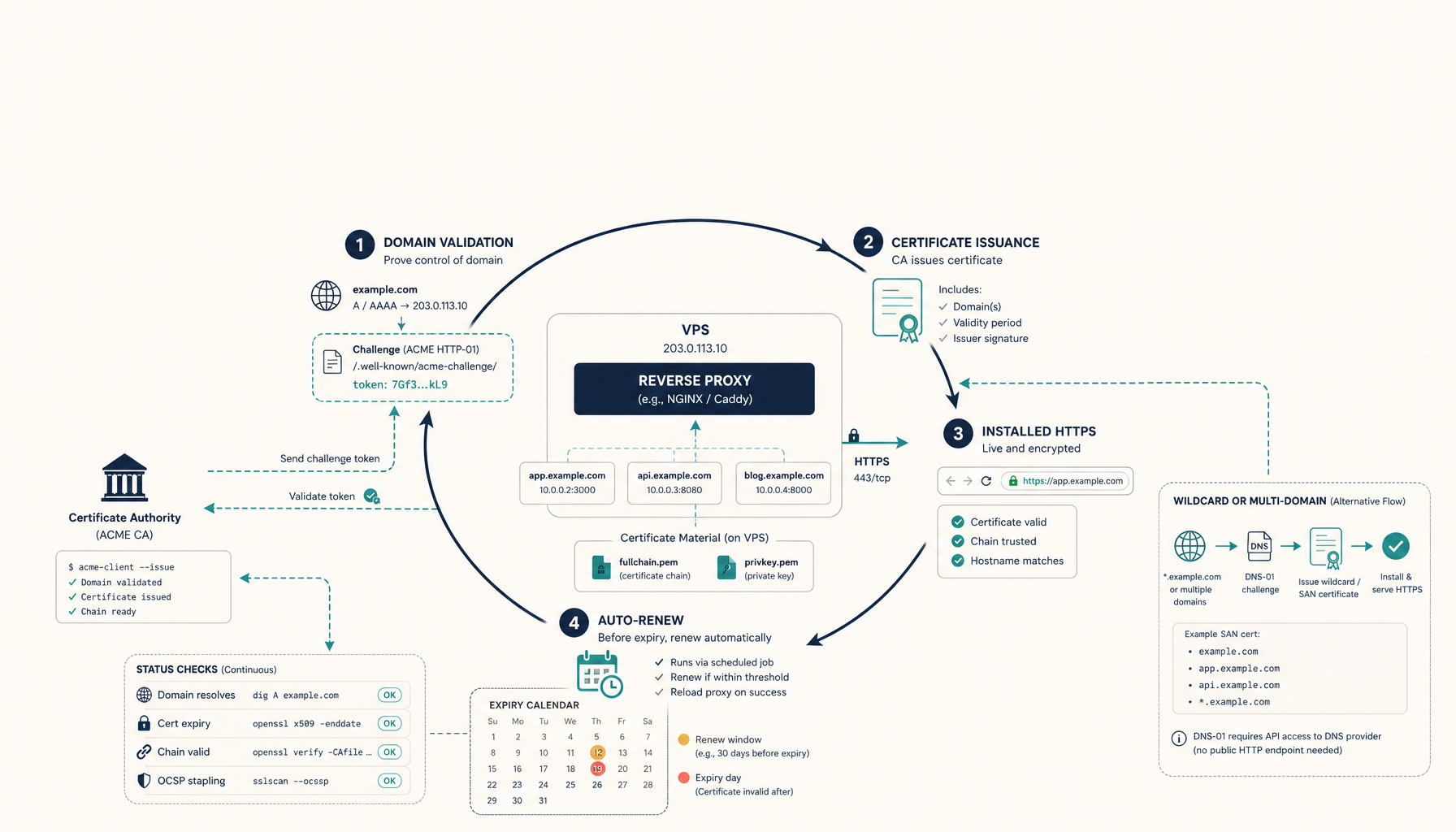 Deploy to VPS20 min read
SSL Certificates on VPS: Complete Let's Encrypt Guide
Set up free SSL certificates on your VPS using Let's Encrypt with Certbot, Traefik, or Caddy. Includes auto-renewal and wildcard certificates.
Read on deploytovps.com Deploy to VPS7 min read
A Safer Reverse-Proxy Decision Tree for Self-Hosted Media Apps
Should Jellyfin and Immich be public behind a reverse proxy, private over a VPN, or both? A decision tree that weighs privacy, family access, and streaming bandwidth instead of guessing.
Read on deploytovps.com